Catastrophe Risk in Latin America | Evolution, technology and resilience in an increasingly complex landscape
Jul 30, 2026
By Jose Miguel Varela & Martin Bereche
During the
Miami Latin American Claims (Re)Insurance Forum, held in Miami in June 2026, specialists from the Latin-American Insurance and Reinsurance market analysed one most demanding topics for the industry: managing natural catastrophe risks (NAT CAT) in a context shaped by climate change, growing asset exposure, and the emergence of new sources of loss.

Among the panellists was Martín Bereche, Director of Advanta Peru, who shared his experience gained from more than three decades of working on major catastrophic events across Latin America. His contribution offered a practical perspective about the risk’s evolution and the lessons learnt in the field, facilitating a valuable exchange with insurers, reinsurers, underwriters and claims experts from across the region.
A risk that is changing faster than traditional models
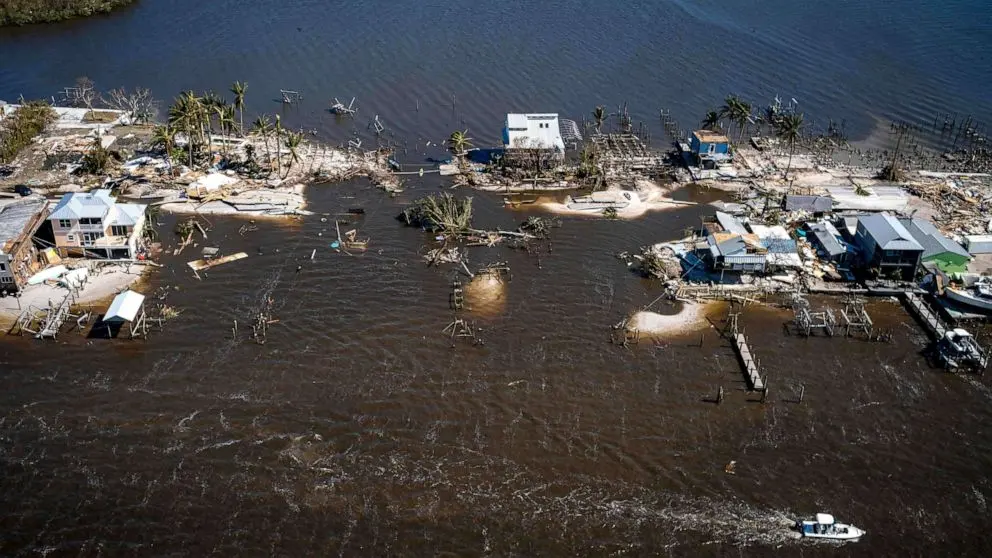
One of the forum’s key conclusions was that catastrophe risks can no longer be assessed solely by using historical parameters. Events such as floods, wildfires, earthquakes, landslides, and droughts are becoming more frequent and intense, driven by climate change and increasing exposure in vulnerable areas.
However, market concerns now extend beyond direct physical damage. Experts highlighted the growing significance of secondary risks, including water and smoke damage, contamination, business interruption, third-party liability, and fraud associated with large-scale events. These factors represent an increasing share of final losses and require broader, more sophisticated technical assessment.
 The conclusion is clear: understanding today's catastrophic exposure requires analysing not only the primary event, but also its indirect and cumulative impacts on Insureds, Insurers and Reinsurers.
Technology and artificial intelligence: a new competitive edge
In light of this, the industry has accelerated the adoption of technological tools to enhance prevention, risk management and loss response.

Discussions highlighted the growing use of probabilistic catastrophe models, loss analysis platforms, artificial intelligence, integration APIs, virtual inspections, drones, and geospatial analytics. These technologies allow for more precise assessment of exposures, speed up claims handling and help reduce operational errors, while strengthening fraud detection and control mechanisms.
Digital transformation is also reflected in the implantation of 24/7 Monitoring Centres, which incorporates information from specialist bodies such as SENAMHI, IGP, NOAA and other early-warning platforms. This approach allows critical scenarios to be anticipated and preventive advice to reach clients in good time, ahead of an event. Equally important is the regular review of limits, sub-limits and coverage conditions, to ensure that insurance programmes accurately reflect new exposures and the accumulation of emerging risks.
As a result, the market is shifting towards
a more integrated model, in which the insurer moves beyond simply responding after a loss to become a strategic partner supporting the client before, during and after an emergency.
Prevention at the heart of resilience
Another central topic of the forum was the need to
strengthen preparedness and mitigation strategies.
Specialists agreed that organisational resilience depends on properly identifying vulnerabilities through technical inspections, risk segmentation, CAT plan development, simulation exercises, and coordinated response protocols involving insureds, brokers, insurers and specialist loss adjusters.
Experience shows that an adequate coverage, backed by business continuity planning and operational response capability, can make the difference between a swift recovery and prolonged disruption to operations.
The challenge of balancing capacity, price and sustainability
Discussions also addressed the shared responsibility of Insurers and Reinsurers in maintaining
sustainable risk transfer arrangements across the region. Participants highlighted the efforts international markets are making to model climate risk properly and adapt their underwriting capacity to increasingly complex scenarios. Underwriters, meanwhile, raised the ongoing challenge of striking a balance between commercial competitiveness and the need to maintain technically adequate rates capable of supporting the commitments made under policies.
In this context, one of the forum's most notable warnings was that the current soft market should not translate into a relaxation of underwriting discipline. On the contrary, rising climate volatility demands rigorous risk assessment and selection criteria.
Transparency and independence in claims management

From the Reinsurers' perspective, one reflection stood out in particular: the need to
strengthen the technical independence and expertise of Adjusters handling complex losses.
Experts agreed that transparency and the timely flow of information are essential to the proper functioning of the entire insurance chain. Where communication is poor or decisions lack solid technical grounding, policyholders can be left with mistaken expectations, increasing disputes during the adjustment process.
A new outlook for a new risk landscape

The panel's main conclusion was that catastrophe risk analysis is undergoing a
profound transformation. Traditional models of underwriting, assessment and management must evolve at the same pace as shifting climate threats and economic exposures.
Prevention, continuous monitoring, operational readiness and response capability have become factors just as important as financial solvency. Likewise, technology and artificial intelligence are
emerging as differentiators for organisations aiming to lead claims management in the years ahead.
In a landscape marked by natural events that are more frequent, more complex and more costly, the insurance industry faces the challenge of strengthening its clients' resilience through a combination of technical knowledge, technological innovation and transparent, results-driven management. The ability to adapt is no longer a competitive advantage: it has become an essential condition for the sector's future.
About the authors

Martin Bereche - Director of Advanta Peru. A Loss Adjuster with 35 years' experience in the insurance industry. He has been involved in the handling of major events, including the Pisco earthquake (Peru, 2007), the Concepción earthquake (Chile, 2010) and the El Niño phenomenon in Northern Peru (2017).

Jose Miguel Varela - Executive Director of Advanta Global Services. An international Adjuster with 24 years' experience in insurance, 21 of them as an independent Adjuster. He has extensive experience handling natural catastrophes linked to hydrometeorological risk in the Atlantic and Pacific basins, as well as earthquakes in Chile and Haiti (2010), Mexico (2017), Puerto Rico (2020) and Venezuela (2026).